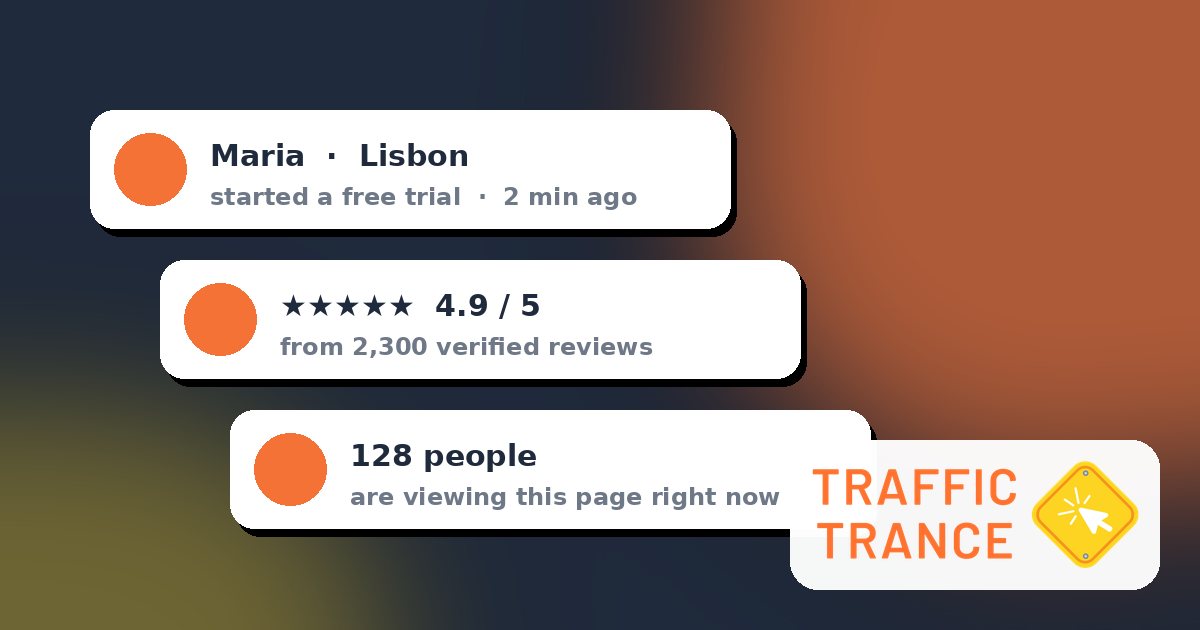
FOMO, the fear of missing out, is one of the strongest forces in buying decisions. We hate the idea that others are getting something good while we hesitate. Used honestly, FOMO helps visitors make a decision they already wanted to make. Used dishonestly, with fake timers and invented "only 1 left" warnings, it destroys trust and invites complaints.
This guide covers 15 FOMO marketing tactics that work on real websites, how to apply each one ethically, and how to test them without guesswork.
What is FOMO marketing?
FOMO marketing is any technique that highlights popularity, scarcity or time limits so visitors act now instead of "later" (which usually means never). It rests on two well-documented biases:
- Social proof: if many people choose something, it is probably good.
- Loss aversion: losing an opportunity feels worse than gaining an equal one feels good.
The ethical rule is simple: only show information that is true. Real deadlines, real stock, real activity. Everything below follows that rule.
Popularity tactics
1. Recent purchase notifications
A small popup such as "Lucas from Berlin just bought the Pro Bundle" proves that people buy right now. It is the most widely used FOMO tactic because it combines popularity and recency. Feed it with real orders or signups. Our complete guide to social proof popups shows how to set it up.
2. Live visitor counts
"57 people are viewing this right now" works on launch pages, ticket sales and limited offers. Show it only when the number is meaningful; "2 people are viewing this" can have the opposite effect.
3. Signup or sales counters
"1,240 marketers joined this month" is calm, credible FOMO for B2B and SaaS, where individual purchase alerts can feel out of place.
4. "Bestseller" and "Trending" labels
Labelling your genuinely most popular items reduces choice paralysis and nudges hesitant buyers toward the safest choice.
5. Review highlights at the moment of doubt
Show a short five-star review on the pricing or checkout page. Fear of missing out is stronger when visitors also feel confident the product is good.
Time-based tactics
6. Real countdown timers
A countdown to the end of a sale, the start of a webinar or the close of early-bird pricing turns "maybe later" into "now". The timer must match a real deadline, and the offer must actually end when it reaches zero.
7. Order-by cut-offs for shipping
"Order in the next 3 h 12 min for delivery on Friday" is one of the most honest and effective urgency messages in ecommerce, because it is useful information.
8. Limited-time bonuses
Instead of discounting, add a bonus for a short period: a free template, an extra month, a gift. It protects your price while still rewarding fast action.
9. Seasonal and event-based campaigns
Black Friday, back-to-school, the end of the quarter: natural deadlines that visitors already understand. Announce them with a slim top bar instead of a full-screen popup.
Scarcity tactics
10. Low-stock alerts
"Only 4 left in size M" is powerful when it comes straight from your inventory. Never hard-code it.
11. Limited seats or spots
Workshops, coaching calls, beta programs and events have natural capacity limits. Show remaining spots and update them in real time.
12. Exclusive access
Early access for subscribers, members-only pricing or invite-only features create FOMO without any time pressure. Visitors want what others already have.
Lead-capture tactics
13. Exit-intent offers
When a visitor moves to leave, show one relevant offer: a coupon, a checklist or a reminder that the sale ends tonight. Exit intent catches people at the exact moment of the decision.
14. "Don't miss the next one" email capture
For content sites and blogs, the most natural FOMO is about future value: "Get next week's teardown before it goes public." A compact email collector converts readers who are not ready to buy yet.
15. Waitlists for sold-out items
A sold-out product is social proof by itself. Replace the dead end with "Join 380 people on the waitlist" and you collect demand instead of losing it.
FOMO copy templates you can adapt
Good FOMO copy is short, specific and factual. Swap in your own details:
- Recent activity: "[Name] from [City] just [action] [product] · [time] ago"
- Counter: "[Number] people [action] in the last [period]"
- Live visitors: "[Number] people are looking at this right now"
- Deadline: "[Offer] ends in [time]. After that, the price goes back to [price]."
- Stock: "Only [number] left in [variant]. Restock expected [date]."
- Shipping: "Order within [time] to get it by [day]."
- Waitlist: "Sold out. Join [number] people on the waitlist."
Notice what these templates have in common: a number, a time reference and a concrete action. That combination is what makes a message feel real instead of salesy. Translate them naturally for each audience; a visitor reading in their own language trusts the message more.
FOMO mistakes that backfire
- Fake timers that reset. Visitors refresh, notice, and never trust you again. In many markets, fake urgency and fake scarcity can also break consumer-protection rules.
- Stacking every tactic on one page. A countdown, a stock alert, a visitor counter and a purchase popup at once feels like pressure, not information. Pick one or two per page.
- Interrupting too early. Give visitors a few seconds to understand the page before showing anything.
- Ignoring mobile. On small screens, use short messages and compact bars that never cover the main button.
- Exaggerated copy. "LAST CHANCE!!!" reads as spam. Calm, specific facts convert better.
Matching tactics to your business
| Business type | Start with | Add later |
|---|---|---|
| Online store | Recent purchases, low stock | Shipping cut-off, exit-intent coupon |
| SaaS or app | Signup counter, reviews | Limited-time bonus, live visitors on pricing |
| Courses and events | Remaining spots, countdown | Recent registrations |
| Agency or services | Recent bookings, testimonials | Limited monthly slots |
| Blog or media | Email capture | Exclusive early access |
How to test FOMO tactics in 4 steps
- Pick one page with good traffic and a weak conversion rate, often the pricing or product page.
- Measure a baseline for one or two weeks: visitors, conversions, conversion rate.
- Add one tactic, for example recent signups or a real countdown, and change nothing else.
- Compare after a similar period and similar traffic. Keep what wins, remove what doesn't, then test the next idea.
Traffic Trance shows impressions, hovers and clicks for every notification, so you can see which messages visitors actually engage with. You can also target each notification by page, device, country and language, keeping every message relevant.
Frequently asked questions
Is FOMO marketing manipulative?
It becomes manipulative when the information is false. Showing real activity, real stock and real deadlines simply gives visitors facts they would want to know anyway.
Which FOMO tactic works best?
For most websites, recent activity notifications and genuine deadlines produce the clearest results. The best tactic is the one that matches a real reason to act now in your business.
Will FOMO popups slow down my website?
A lightweight tool that loads asynchronously adds almost nothing to page load. Traffic Trance uses a single small script that doesn't block your content.
How much does it cost to add FOMO notifications?
Nothing with Traffic Trance. Create a free account, add one line of code to your site and launch your first notification in minutes.
Start with one honest nudge
You don't need aggressive tricks to benefit from FOMO. Show visitors what is genuinely happening (people buying, spots filling, deadlines approaching) and let them decide. Try Traffic Trance free and add your first FOMO notification today.